

How was espresso born?
In the beginning, espresso was not born as a luxurious recipe or an inherited ritual, but rather as a response to a simple need that people experienced daily. In Italy at the end of the nineteenth century, cities were changing rapidly, cafes were filling up, long waits were no longer acceptable, and time constraints were a major problem. Coffee at that time was boiled or steeped and prepared slowly as if time were part of the recipe, but this time itself became a burden.
In 1884, a different approach to coffee was attempted. Moriondo patented a machine that used steam pressure to force water through the coffee grounds instead of letting it wait. The idea was more practical than poetic, aiming to save time without sacrificing power. His machine succeeded, but it was large, heavy, and designed to brew large batches at once. Moriondo himself didn't seek fame or widespread recognition, and his invention remained like a seed planted in its time, but which never sprouted.
Years later, a small step changed everything. Bezzera rethought the same idea from a different angle: "What if each cup was prepared for one person?" So it went from simply speeding up to personalizing; a cup made in the moment and served immediately. This shift made coffee closer and more human, even if the machine was doing the work.
But ideas alone are not enough. At the Milan Exhibition in 1906, the name “Caffè Espresso” appeared for the first time. Pavone , who saw the invention as a viable project, developed the machine and made it safer and more stable, and presented it to the public, producing a drink with a clear identity: quick, direct, and specially prepared for the drinker.
Until then, espresso was sometimes harsh and bitter because the pressure used was limited. The real change came in the 1940s with Gaggia . Using a manual tamper and higher pressure, the coffee came out completely different. A golden layer appeared on the surface, something people had never seen before. They were surprised, hesitant, then accepted it—a sign that something had changed in the cup.
ﻻ
Even the name espresso carries this story within it; the word is derived from the Italian verb Esprimere , meaning "to squeeze" or "to extract by pressure." Speed wasn't the primary intention, but rather a natural consequence. Espresso is coffee that is squeezed, served immediately, and prepared specifically for a particular person.
ﻻ
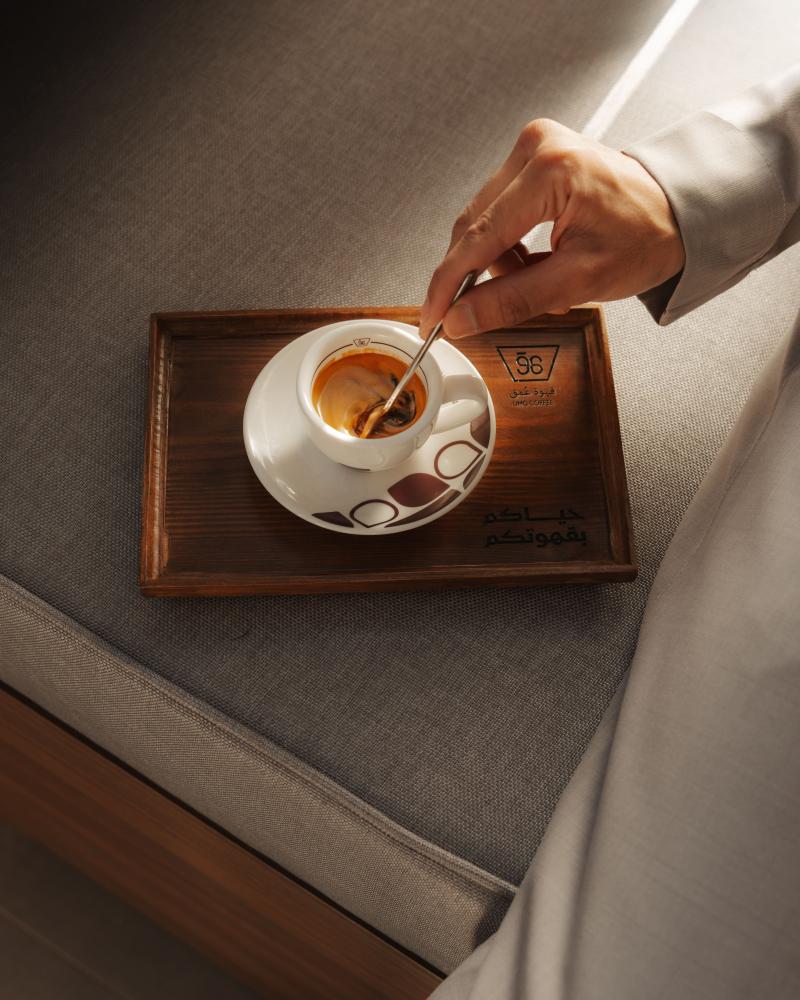
Espresso may appear to be just a small cup, but it holds much within it. It tells the story of a time that has changed, and of people who no longer want to wait; it is the product of a whole century of trials, experiments, and mistakes.